
The Integrative Second Opinion
The second set of eyes your pet deserves. A written analysis of what is actually going on,
followed by a working session with someone who reads trends, not snapshots.
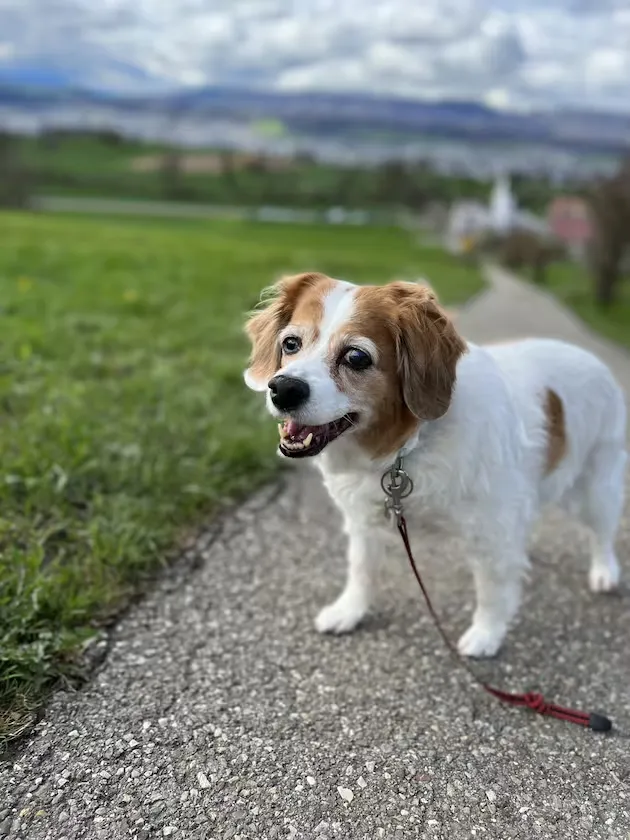
Simie at twenty years of age. One of the oldest living dogs, now living in Switzerland. Once labeled unadoptable at eight.
If we are doing everything right,
why are pets living shorter lives?
Most pet parents leave the vet with more questions than answers — whether they realize it or not.
The labs came back "normal" but something is clearly off. The diagnosis is vague. The plan is a half-sheet of paper. Every question gets a version of "let's watch and see." Or the answer comes in the form of a prescription: Apoquel, Cytopoint, a behavioral med, a steroid. Something that quiets the symptom without ever asking what is causing it.
That is not because vets do not care. Most of them do. It is because the conventional veterinary system is built for throughput and shaped by corporate and pharmaceutical incentives that were never designed with your individual pet in mind.
Dogs used to live to fifteen, eighteen, even twenty. Thriving. Until they weren't. Today the average Golden Retriever makes it to nine.
Something has to change. It starts with a second set of eyes.
"His bloodwork came back 'normal' and X-rays showed no blockage — but his behavior told a completely different story, and I knew something wasn't right."
— Caroline, Hank's mom
What the Integrative Second Opinion is
It is a structured review of your pet's health, delivered in two parts.
Part one: a written analysis.
You send me what you have on your pet. That might be one set of labs. It might be three years of records, imaging, specialist notes, and a binder full of observations. It might be nothing but your own notes on what has been off. Current diet, medications, supplements, recent issues, the things that have been nagging at you.
Whatever you have is the right starting place.
Within 48 to 72 hours of receiving your intake, I send you a written analysis covering:
Trend analysis across your pet's lab history
Flags the standard reference ranges may have missed
Tests that should be running but likely are not (UPC ratio, SDMA, blood pressure)
A prioritized next-step list, specific to your pet
The exact questions to bring to your next vet appointment
Part two: a working session.
We get on a call. Phone or video. Usually forty-five minutes to an hour. Sometimes longer if we need it.
This is not a sales call. It is the conversation the vet appointment was supposed to be. We walk through what I am seeing. We talk through your pet specifically. We build out what comes next together.
You walk away with clarity, a written record, and a direction.
What you are actually buying
You are not buying a few hours of my time.
You are buying a different trajectory for your pet. A real read on where things are heading, before it becomes the thing nobody caught in time. The second set of eyes the conventional system is not set up to give you.
This is for you if...
You want to set your pet up on the best possible trajectory from the start, before anything seems wrong
Your pet's bloodwork keeps coming back "in range" but your gut is telling you something is off
You have been told to "watch and see" and you want a clearer plan
Your pet is on a medication and you want to understand what is actually happening underneath the symptom
You want to walk into your next vet appointment with sharper questions and a real plan
You are looking for a second set of eyes on your pet's overall trajectory, not just on a single issue
You believe your daily observation of your pet matters and want it taken seriously as part of the clinical picture
This may not be the right fit if...
Your pet is in an active medical emergency. In that case, please go directly to your veterinarian or emergency clinic.
You are looking for a quick answer or a single recommendation rather than a comprehensive review
You want me to replace your veterinarian rather than work alongside them
The offer
The Integrative Second Opinion
Founding rate: $397 Standard rate: $500. The founding rate is available while I am building the founding cohort of clients.
What you get:
A written analysis of your pet's health, delivered within 48 to 72 hours of your intake
A forty-five to sixty-plus minute working session, phone or video
A prioritized next-step list specific to your pet
The exact questions to bring to your next vet appointment
Clarity, a written record, and a direction
What clients are saying
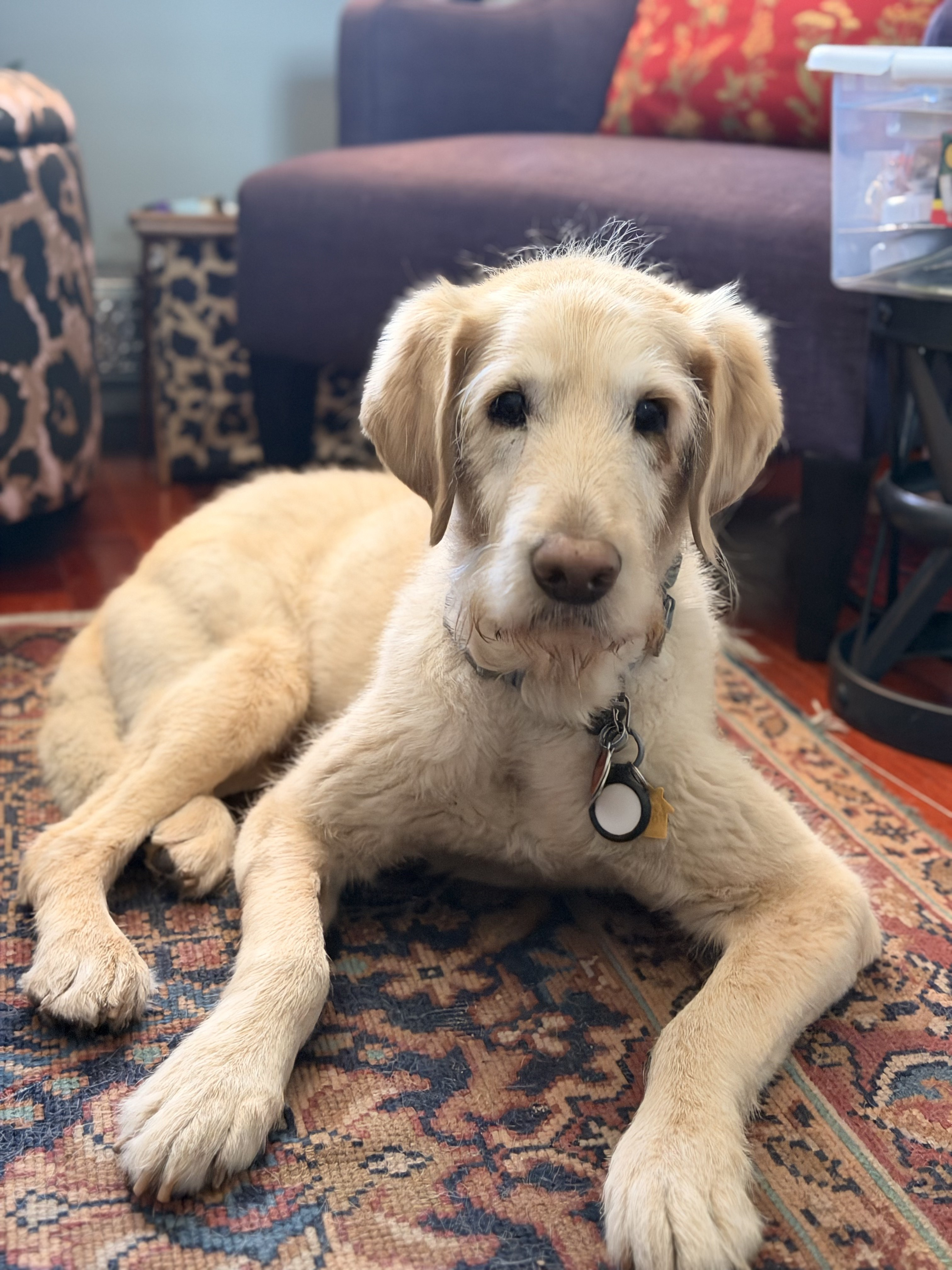
“I went looking for help after my 12-year-old dog, Handsome Guapo Hank, had a medical emergency where I truly thought it might be the end. His bloodwork came back ‘normal’ and X-rays showed no blockage — but his behavior told a completely different story, and I knew something wasn’t right. After stabilizing him, I was still at a loss. Before working with Jenn, I felt helpless and overwhelmed. This experience changed everything. Jenn shares her expertise in a clear, practical way and shows you a path you can actually integrate into daily life, especially when it comes to nutrition and overall wellness. Small, manageable changes grounded in science. I now feel confident and empowered as an advocate for Hank’s health, even alongside his vet.”
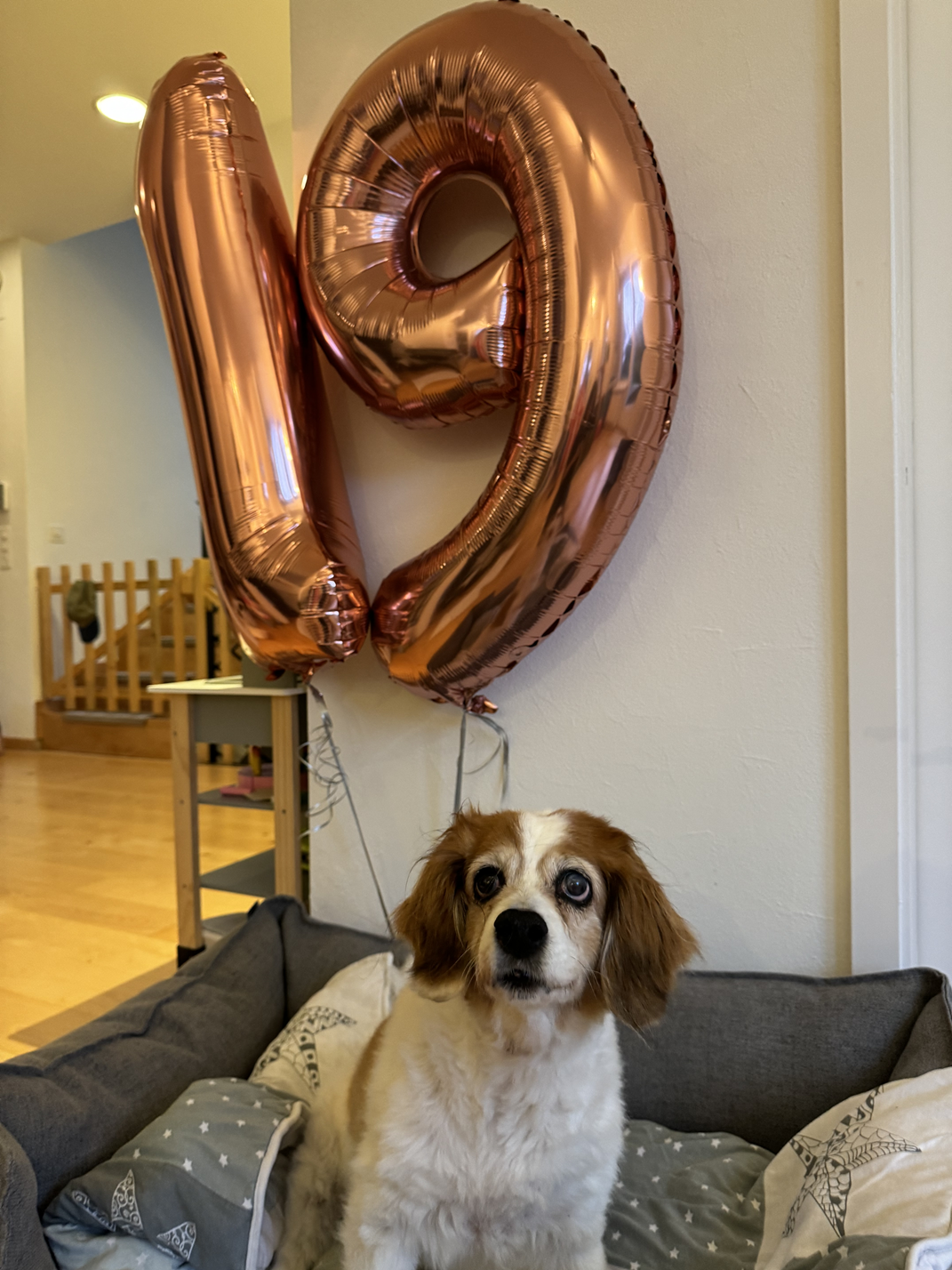
"Jenn is THE ABSOLUTE BEST!!! Look no further. I started working with her when I adopted Simie, and what a difference she has made to our quality of life. It began with pet sitting and grew into health and nutrition work. Simie is a picky eater with a sensitive stomach, and Jenn didn't reach for prescriptions or default answers. She paid close attention, experimented thoughtfully with what foods worked for Simie's individual body, and brought real expertise to figuring out what my dog actually needed."
Who I am
I am Jennifer Makeeff.
My professional background is in presidential-level advance, communications, and operations — the White House, DHS, HHS, global Fortune 500 companies, scaling businesses, and strategic campaigns across five continents. I also built my own seven-figure business from the ground up.
The work taught me how to read patterns in complex systems, see the cracks forming before they become catastrophes, and translate between people who weren't speaking the same language.
This work has a specific origin. I lost Keiki, my cat, and Jessie, my dog, within the same season. The grief sent me deep into the question of what I could have done differently, what I had missed, and what I wished someone had been there to help me see. I started doing things differently with the animals around me. Friends started asking what had changed. What are you doing that is different? My dog is calmer. Happier. Their coat looks better.
At the same time, I was building a pet services business and mending a grieving heart, and a pattern was forming in front of me that I could not unsee. More than half of the dogs coming into our care were on some form of behavioral or anti-anxiety medication. Pharmaceutical interventions have their place. But when more than half of an entire population of pets is on chronic medication, the question is not whether each prescription was warranted. The question is what is happening to our companions, and to the model of care surrounding them, that has produced this number.
I started asking. I have not stopped.
The answers led me into the integrative pet health community — into the research of Dr. Karen Becker, Dr. Anna Hielm-Björkman and the DogRisk group at the University of Helsinki, Rodney Habib, Dr. Richard Patton, and the broader community of veterinarians and scientists working on species-appropriate nutrition, vaccine science, and pet longevity. What I learned there reshaped everything I did with the animals in my own care.
Today I share my home with three of them.
Bella came to me from a breeder and hoarding situation. She had lived in a crate for three years before I got her — never on grass, never on stairs, never walked on a leash, riddled with skin infections, allergies, gut disruption, and chronic ear infections. She was one of the hardest cases I have ever taken on. She is also the living proof of what species-appropriate, integrative care can do when it is given enough time and attention.
Houston is our Maine Coon. He is a senior cat whose veterinarian recently looked at his bloodwork and said it reads like the bloodwork of a young animal.
Lyra is our special needs girl. She lives with seizures and is on palliative care, and she has beaten the odds and continues to thrive on a combination of integrative and conventional medicine working together. She is the clearest example I have of what this approach actually looks like in practice. Not integrative instead of medicine. Integrative alongside medicine, making the medicine work better.
That conversation became a mission with one phrase at the center of it. Elevate the care. For our companions, individually and collectively. Everything I have built since serves that mission. This Second Opinion is one expression of it.
I hold a postgraduate certification in Integrative Pet Health Coaching and have studied alongside leading veterinarians and scientists at the forefront of pet health and longevity. I work alongside your veterinarian, not in place of them. The goal is to expand the conversation about your animal's care, not to replace it.
I am not a veterinarian. I am a translator, a pattern reader, and an advocate for your pet.
The philosophy that guides this work
"Wellness is not just the absence of disease. It is actually recognizing that we can make intentional lifestyle choices on a daily basis that ultimately create abundant health."
— Dr. Karen Becker
This is the north star of Integrative Pet Parent and of every Second Opinion I deliver. Wellness is not a reaction to illness. It is a daily practice of intentional choices. Food. Movement. Supplement strategy. Stress reduction. Environment.
My job is to help you make those choices with clarity and confidence.
Common Questions
What if I do not have recent bloodwork?
Send what you have. Observations, diet notes, symptom history, or medications are enough to start. A session without recent labs is still enormously useful, and part of what we will work out together is which tests would be worth requesting at your next appointment.
How do I send you my pet's records?
Once you complete your intake form, you will receive instructions for uploading your pet's records securely. Most clients send PDFs of recent labs, a brief written summary of their pet's history, and any specialist notes or imaging reports they have. Records are kept confidential and used only for your pet's analysis.
What if I have years of records?
Send it all. Reading trends across multiple years is where I do my best work. More data means a better analysis.
How does the call get scheduled?
Immediately after you complete your intake, you will receive a link to book your working session. You choose a time that works for you. The call happens after I have delivered the written analysis, so the session is a working conversation based on real material, not an introductory chat.
Are you going to tell me to stop seeing my vet?
No. Most of my clients continue with their regular veterinarian and use my input alongside that relationship. The goal is to walk into your next appointment with better questions, a clearer plan, and information your vet may not have had time to surface in a fifteen-minute visit.
What if I want to keep working with you after the Second Opinion?
We talk about that on the call. Several paths exist for ongoing support, depending on what your pet's situation calls for. You decide what makes sense after we have walked through the analysis together.
What if I am not sure this is right for me?
Read my article "Nine Years" on Integrative Pet Parent. If what you read there resonates, this is the next step. If it does not, subscribe for free and start with the weekly writing. There is no wrong entry point.
One more thing
This work does not have to be expensive to be real.
Most of what changes outcomes is about small, consistent choices made with better information. A shift in food. A question asked at the vet that was not asked before. A trend caught a year before it would have been a diagnosis.
The Integrative Second Opinion is one way in. It is not the only way. If it is not the right time, subscribe to Integrative Pet Parent and start with the weekly writing. Most of it is free.
Dogs used to live to fifteen. Eighteen. Twenty plus years of age. They were thriving.
They can again.
Yours can.
Copyright 2026. Integrative Pet Parent. All Rights Reserved.